 Cold Brew At Home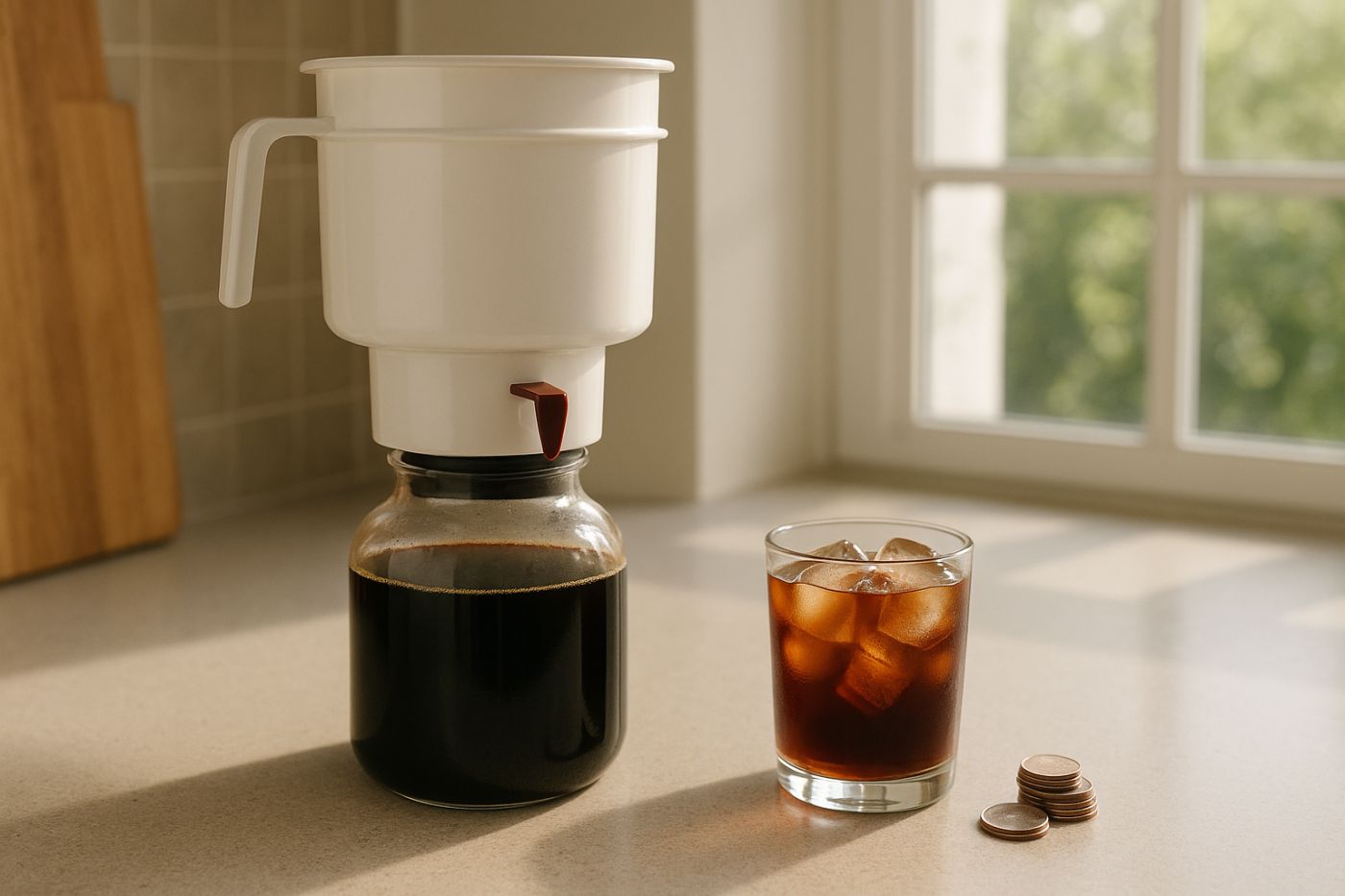
Short answer: if you drink cold brew more than once or twice a week, the Toddy Cold Brew System is worth it. At $44.95 it usually pays for itself within the first month, and the ongoing cost per batch is close to nothing since there’s no pod, cartridge, or subscription involved. If you only drink cold brew occasionally, the math looks different. Here’s the honest breakdown, persona by persona, with the real numbers behind it.
The Quick Verdict
| Your situation | Worth it? |
|---|---|
| Drink cold brew daily or near-daily | Yes, easily |
| Drink cold brew 2-4 times a week | Yes |
| Drink cold brew once a week or less | Marginal — consider a smaller brewer |
| Only drink it occasionally in summer | Probably skip it |
| Currently buy coffee-shop cold brew regularly | Yes, pays for itself fast |
| Need coffee ready same-day, no planning | Skip it — the 12-24hr steep is a dealbreaker |
Who It’s Genuinely Worth It For
The daily cold brew drinker
If cold brew is part of your daily routine, this is the clearest case. One batch yields 36–38 ounces of concentrate, enough for roughly a week of daily servings for one person. Over a year, that’s about 50 batches for the cost of the brewer plus a few felt filter replacements — a small fraction of what the same volume would cost from a coffee shop or grocery store.
The former coffee-shop regular
Someone spending $5 on cold brew three or four times a week is spending $60–80 a month before any home equipment. The Toddy pays for itself inside the first month for this group, and every batch after that costs a small fraction of a coffee-shop price.
The flavor-focused home brewer
If you’ve tried cheaper cold brew makers and found the result too sedimenty or acidic, the felt filter is a genuine upgrade. It’s the reason the Toddy keeps showing up as the reference point other brewers get compared against.
Who Should Skip It
The occasional drinker
If cold brew is a once-a-week or seasonal treat, a full 36-ounce batch may go stale before you finish it (concentrate keeps about two weeks refrigerated). A smaller single-serving brewer or store-bought concentrate makes more sense until your habit grows.
Anyone who needs same-day coffee
The 12–24 hour steep is non-negotiable for good flavor. If you can’t plan a day ahead, this brewer will frustrate you regardless of how good the result tastes once it’s ready.
Small kitchens with no spare fridge space
The glass decanter takes up real refrigerator real estate. If your fridge is already packed, that’s worth considering before buying.
The Real Cost Math
Here’s the comparison that actually matters — cost per ounce of finished cold brew, home-brewed vs. the alternatives:
| Source | Approx. cost per 12 oz serving |
|---|---|
| Coffee shop cold brew | $4–6 |
| Grocery store bottled concentrate | $1.50–2.50 |
| Toddy, home-brewed (beans + felt filter wear) | Roughly $0.30–0.50 |
At one batch a week (a conservative pace for a regular drinker), that’s roughly 50 batches a year, well over 1,800 ounces of concentrate, for the price of the brewer plus two or three felt filter replacements. Run that against even a modest coffee-shop habit and the Toddy’s $44.95 price tag stops looking like an expense and starts looking like the cheap option.
What You’re Actually Paying For
At $44.95, the Toddy isn’t the cheapest cold brew maker on the market — budget options exist for $15–20. What the extra cost buys:
- A felt filter instead of mesh. Felt pulls less sediment through than the mesh filters used by cheaper brewers, producing a noticeably cleaner cup.
- Larger batch size. 36–38 oz per batch vs. 20–28 oz for most budget alternatives, meaning fewer brew cycles per week.
- Durability. The plastic brewer and glass decanter hold up for years of regular use; budget brewers with thinner plastic or weaker seals tend to need replacing sooner.
- No proprietary consumables. Felt filters are inexpensive and widely available — there’s no lock-in to a single brand’s pods or cartridges.
The Time Investment, Honestly
Active hands-on time is minimal — measuring, grinding, and pouring takes under 10 minutes. The 12–24 hour steep is passive; it sits on the counter or in the fridge while you go about your day. The real time cost is mental: you have to remember to start a new batch before the current one runs low, which takes a week or two to become habit. People who forget and run out entirely tend to be the ones who end up disappointed — not because the brewer failed them, but because the planning didn’t happen.
Common Regrets From Buyers Who Wish They’d Known
Patterns across buyer reviews point to a few recurring sources of disappointment, almost all avoidable with the right expectations going in:
- Underestimating the steep time. First-time buyers sometimes expect same-morning results and are caught off guard by the wait.
- Skipping filter maintenance. The felt filter needs a rinse after every batch and a weekly deep clean — skip this and mold complaints follow, which buyers then (incorrectly) blame on the product itself.
- No spigot on the decanter. Coming from a brewer with a built-in tap, some buyers miss that convenience here.
- Drinking the concentrate undiluted. It’s meant to be cut roughly 1:1 with water, milk, or ice — drinking it straight is overwhelmingly strong and leaves people thinking something went wrong.
None of these are product flaws exactly — they’re expectation gaps. Knowing them ahead of time is usually enough to avoid the disappointment entirely.
Toddy vs. Just Using a Mason Jar
It’s a fair question: can’t you just cold-brew in a mason jar and strain it through cheesecloth for free? Technically yes, but the felt filter is doing real work — cheesecloth and paper towels let through noticeably more sediment, and straining a full batch by hand is messier and slower than releasing a stopper into a decanter. For an occasional single cup, the mason jar method is a reasonable free option. For anyone brewing regularly, the Toddy’s purpose-built filtering system saves enough time and mess that the $44.95 earns its keep quickly.
Long-Term Durability: What to Expect
The plastic brewing container and glass decanter show very little wear after years of regular use in buyer reports — there are no motors, seals, or electronics to fail. The one part that wears out on a predictable schedule is the felt filter, typically good for 60–80 batches (a few months of regular use) before it needs replacing. Budget for a few dollars every few months on replacement filters as the main ongoing cost beyond the initial purchase.
A Simple Decision Checklist
- Do you drink cold brew at least twice a week? → Buy it.
- Are you currently spending $15+/week on coffee-shop or bottled cold brew? → Buy it, it’ll pay for itself fast.
- Do you have a spare hour to plan a day ahead for your next batch? → Buy it.
- Do you need coffee ready the same morning with zero planning? → Skip it.
- Is cold brew a once-a-month treat for you? → Skip it, or consider a smaller single-serving brewer.
FAQ
Is the Toddy Cold Brew Maker worth the money?
For anyone drinking cold brew more than once or twice a week, yes. It typically pays for itself within the first month compared to bottled or coffee-shop cold brew, and keeps paying off for years since there’s no pod or subscription involved.
Who should skip the Toddy Cold Brew Maker?
People who drink cold brew rarely, need coffee ready same-day without planning ahead, or don’t have fridge space for a large batch container are better served by a smaller brewer or store-bought concentrate.
How long until the Toddy pays for itself?
For someone currently buying coffee-shop cold brew a few times a week, typically 2-4 weeks. Compared to bottled grocery-store concentrate, usually 1-2 months.
Is it better than cheaper cold brew makers?
The felt filter produces a noticeably cleaner, less sedimenty cup than the mesh filters used in most budget brewers, and the larger batch size means fewer brew cycles. See our full Toddy Cold Brew System review for the complete breakdown.
Our Verdict
$44.95 isn’t nothing, but for a regular cold brew drinker it’s one of the fastest-paying-off kitchen purchases you can make. The math is straightforward: brew regularly, and it pays for itself in weeks, not months. Drink cold brew rarely, and you’re better off buying it by the cup until your habit justifies the equipment.
Check current price on Amazon →As an Amazon Associate, we earn from qualifying purchases.