 Cold Brew At Home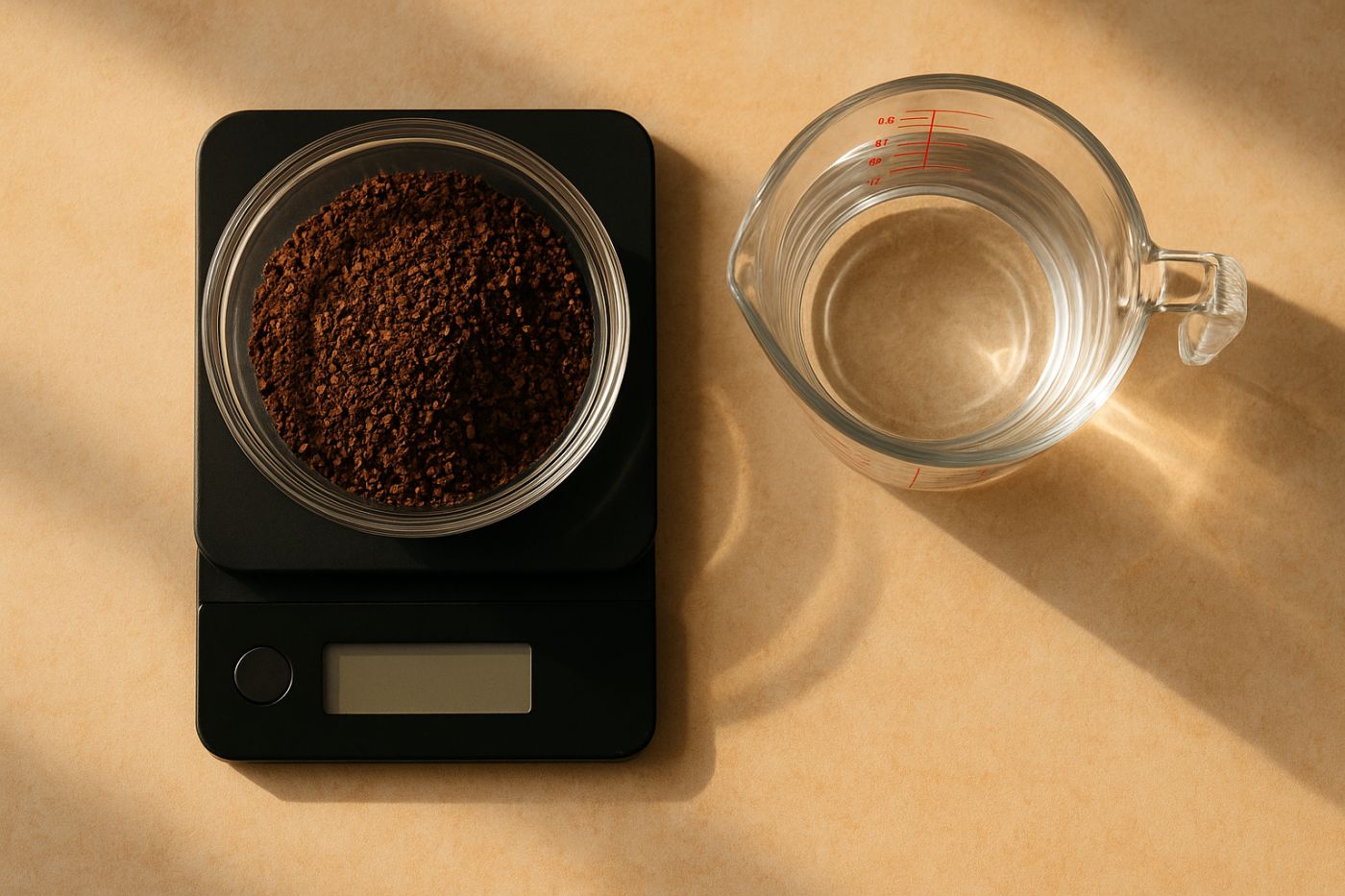
The standard Toddy ratio is 1:4 by weight — about 12 oz (340g) of coarsely ground coffee to 9 cups (roughly 2,100ml) of cold water for a full batch. That yields 36–38 oz of concentrate, meant to be diluted roughly 1:1 when serving. Here’s the exact breakdown for every batch size, plus how to adjust it to taste.
Ratio by Batch Size
| Batch size | Coffee (coarse grind) | Cold water | Yield |
|---|---|---|---|
| Full batch | 12 oz / 340g | 9 cups (~2,100ml) | 36–38 oz concentrate |
| Half batch | 6 oz / 170g | 4.5 cups (~1,050ml) | 18–19 oz concentrate |
| Quarter batch | 3 oz / 85g | 2.25 cups (~525ml) | 9–9.5 oz concentrate |
Steep time and process stay identical regardless of batch size — only the quantities scale down. A quarter batch is a good way to test a new bean or roast without committing a full batch’s worth of coffee.
Why 1:4 Is the Standard
A 1:4 coffee-to-water ratio by weight produces a concentrate strong enough to dilute roughly 1:1 when serving, landing at a strength comparable to iced coffee once mixed with water, milk, or ice. Go stronger (closer to 1:3) and you get a more intense concentrate that holds up better when cut with a lot of milk. Go weaker (closer to 1:5) and you’ll need to drink it closer to undiluted, which some people prefer for a milder daily cup.
Weight vs. Volume: Why It Matters
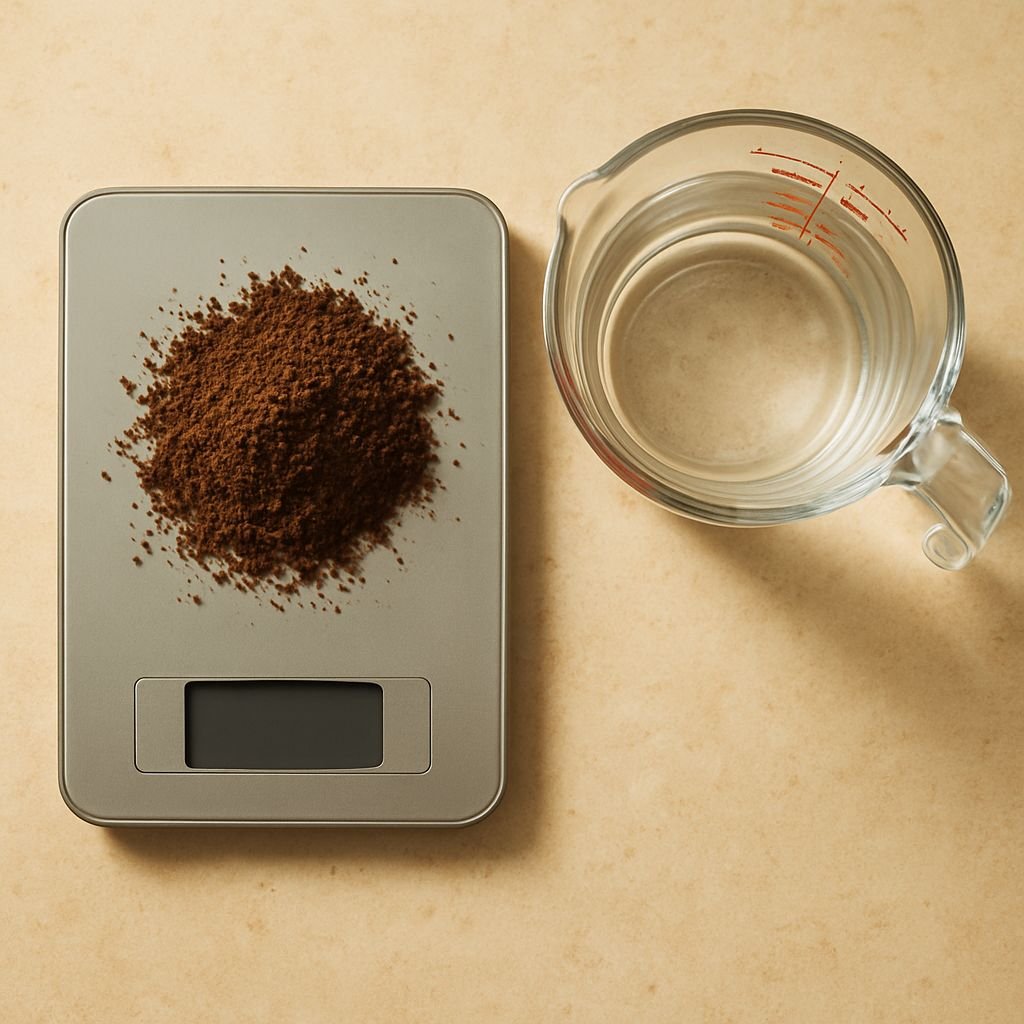
Measuring coffee by volume (cups or scoops) is far less consistent than weight, because grind size and roast level change how densely coffee packs into a measuring cup. The same “12 tablespoons” of coffee can vary by 15–20% in actual weight depending on grind coarseness. A basic kitchen scale removes that variability entirely and is the single easiest upgrade if you want your batches to taste the same every time. If you don’t have a scale, volume estimates run roughly 12 oz of coarse-ground coffee to about 2.5–3 cups by volume, but treat that as a starting point to dial in, not a precise measurement.
Adjusting Ratio to Taste

- Want a stronger concentrate (for espresso-style drinks or heavy milk dilution): try 1:3 — 12 oz coffee to about 6.75 cups water.
- Want a milder, more drinkable-as-is concentrate: try 1:5 — 12 oz coffee to about 11.25 cups water.
- Testing a new bean: start with a quarter batch at the standard 1:4 ratio before committing to a full batch.
Small ratio changes make a bigger difference than you’d expect — adjust in increments of 0.5 on the water side rather than jumping a full ratio point at a time.
Water Matters More Than People Think
Since cold brew is mostly water by volume, water quality has a real, noticeable effect on the final taste. Heavily chlorinated or mineral-heavy tap water can carry through into the concentrate. Filtered water is a simple upgrade that costs nothing extra and often makes a bigger difference than switching beans.
Common Ratio Mistakes
- Eyeballing instead of measuring. Consistency requires actually measuring, at least until you’ve dialed in your preferred ratio.
- Diluting concentrate 1:1 when it was already brewed weak. If you used a 1:5 ratio, drinking it further diluted will taste watery — adjust the dilution ratio to match how strong you brewed.
- Changing grind size without adjusting ratio. A finer grind extracts faster and stronger even at the same coffee-to-water ratio, since more surface area is exposed to water.
FAQ
What is the correct cold brew ratio for a Toddy?
1:4 by weight — about 12 oz (340g) of coarse coffee to 9 cups (~2,100ml) of cold water for a full batch.
Should I measure coffee by weight or volume?
Weight is much more consistent since grind and roast affect how densely coffee packs by volume. A kitchen scale is worth using for repeatable results.
How do I make a half batch in a Toddy?
6 oz (170g) coffee to about 4.5 cups (~1,050ml) water, same ratio and steep time as a full batch.
Bottom Line
Start with the standard 1:4 ratio and the batch-size table above, brew a batch, and adjust from there based on taste — stronger toward 1:3, milder toward 1:5. For the full brewing process from start to finish, see our step-by-step brewing guide, or check our Toddy review if you’re still deciding whether to buy one.