 Cold Brew At Home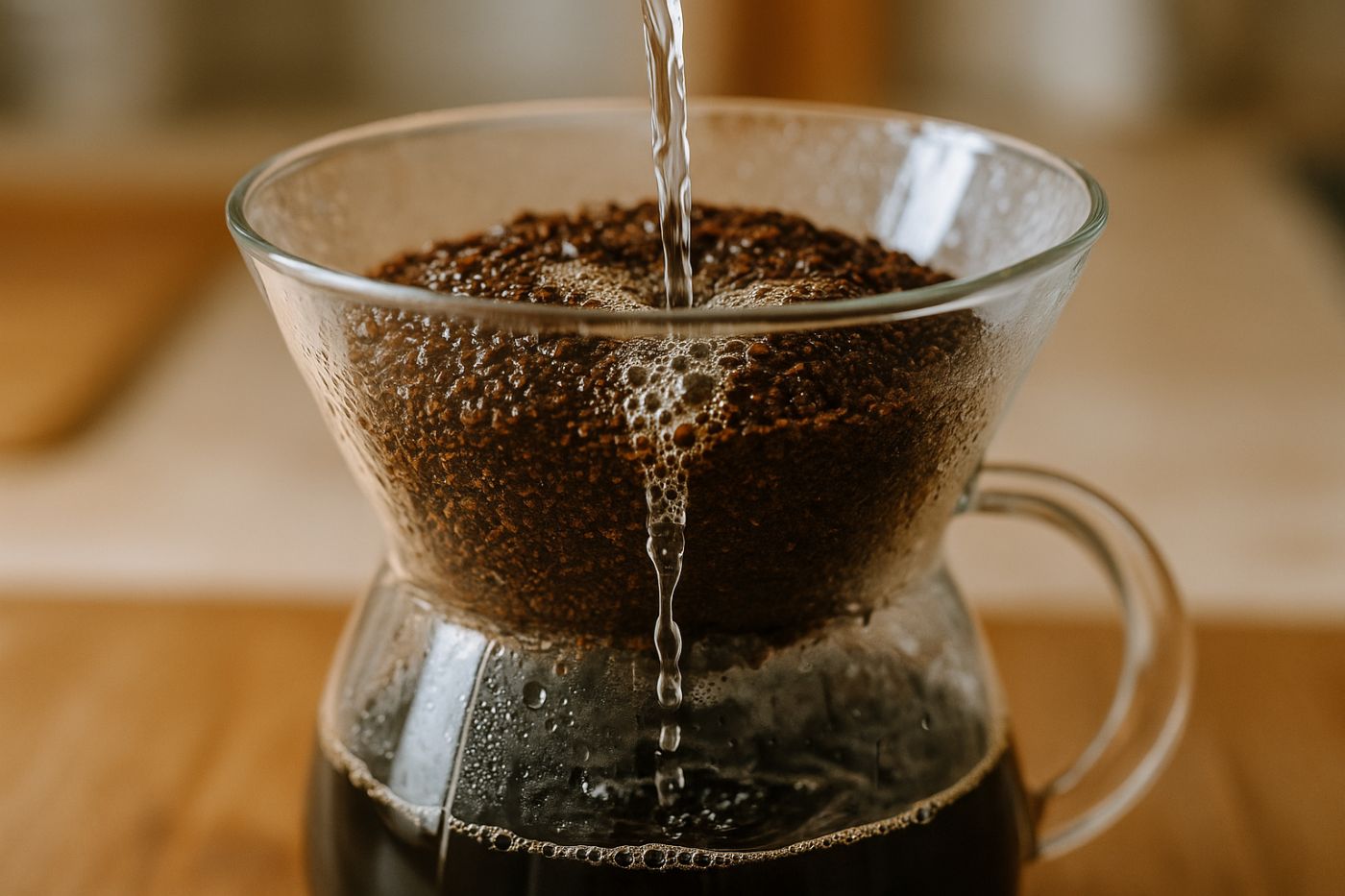
Making cold brew with a Toddy comes down to six steps and one thing you can’t rush: time. Here’s the exact process, with the details that actually change how your first batch turns out — not just the basic steps, but why each one matters and what to do if something looks off.
What You’ll Need
- Toddy Cold Brew System (brewer, felt filter, stopper, decanter)
- 12 oz (340g) coarsely ground coffee — grind similar to French press, not drip
- 9 cups (~2,100ml) cold, filtered water
- A kitchen scale (optional but recommended for consistency)
Step-by-Step Instructions
1. Prep the filter
Rinse a felt filter under cold water for a few seconds — this removes the slightly papery taste new filters can carry and helps it seat properly. Place it in the bottom of the brewing container, then insert the rubber stopper underneath from outside the brewer to seal the drain hole. If the stopper doesn’t seem to be sealing, it’s usually because the filter isn’t sitting flat — smooth it out before pushing the stopper in.
2. Saturate the filter, then add grounds
Pour about 2 cups of water in first, letting it settle around the filter. This step is easy to skip but matters: adding dry grounds directly on top of a dry filter can cause uneven saturation later. Once the base water is in, add your 12 oz of coarsely ground coffee.
3. Add the remaining water slowly
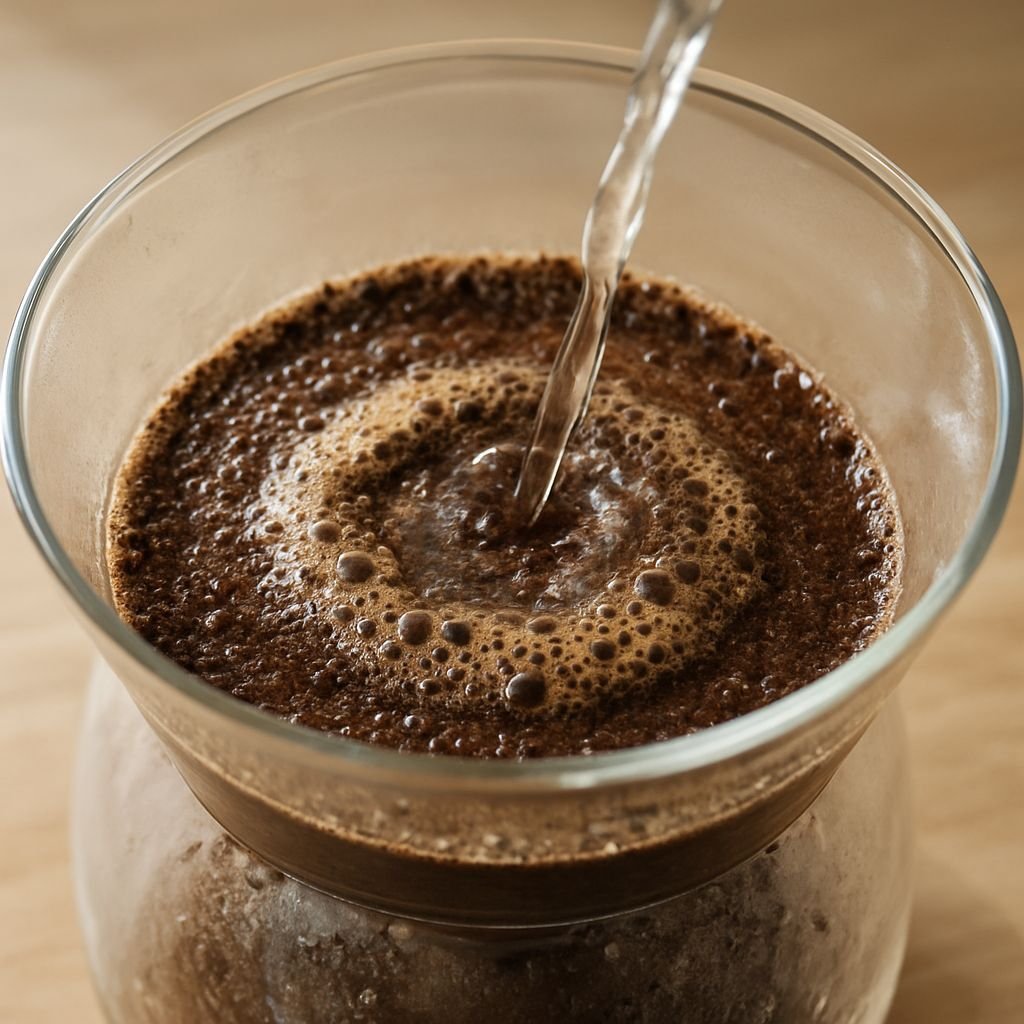
Pour the rest of your water (about 9 cups total) over the grounds in a slow, circular motion rather than dumping it in one spot. This helps every part of the coffee bed get saturated evenly, which matters more for consistency than most people expect — dry pockets in the grounds mean uneven extraction and a less balanced final flavor.
4. Let it steep
Cover the brewer loosely (a plate or the lid resting on top, not sealed airtight) and leave it at room temperature for 12–24 hours. Twelve hours gets you a lighter, brighter result. Eighteen to twenty hours is where most people land as the sweet spot. Past 24 hours you’re not gaining much — extraction has already leveled off, and you’re mostly just risking extra bitterness from over-extraction.
5. Release the concentrate
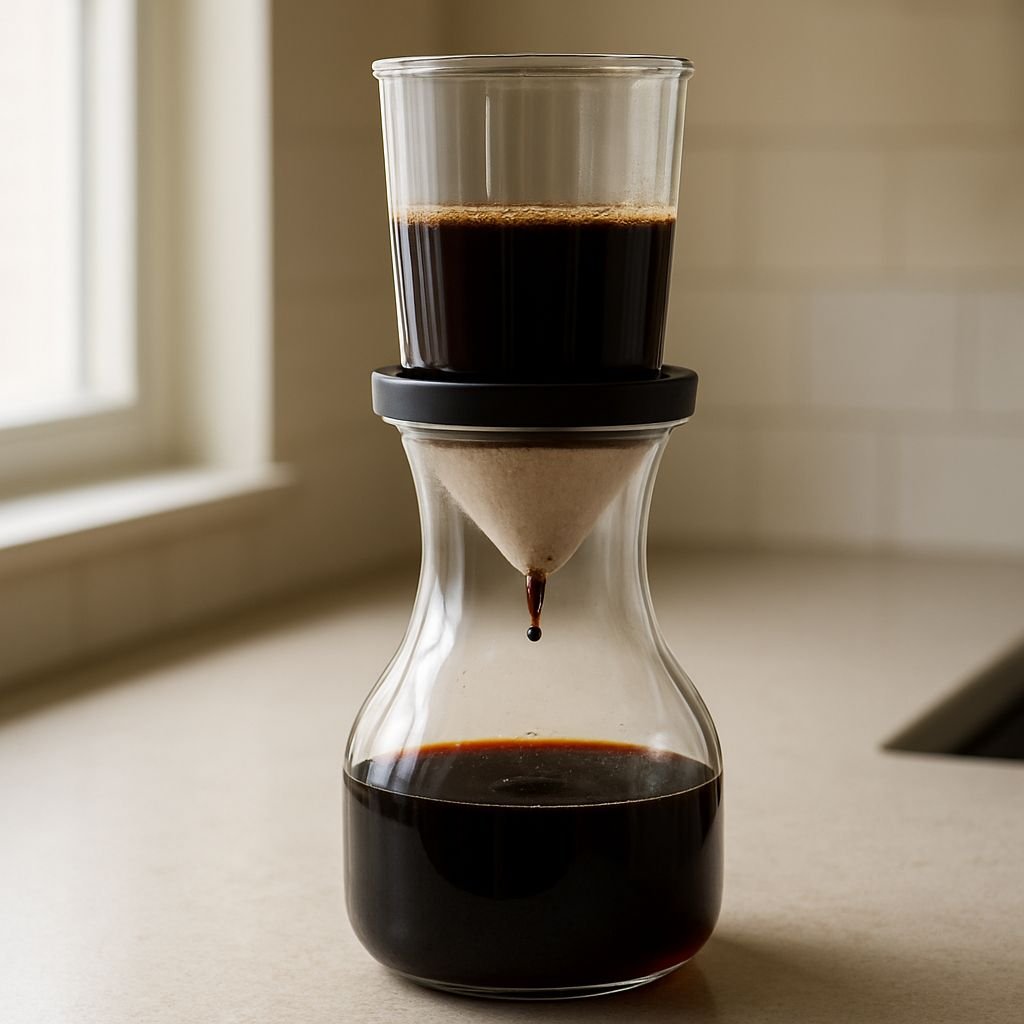
Set the brewer on top of the decanter and pull the stopper. The concentrate will drip through over 15–20 minutes — resist the urge to press or stir the grounds to speed this up, since agitating the bed pushes fine sediment straight through the filter and into your concentrate. Just let gravity do the work.
6. Store and serve
Cap the decanter and refrigerate. The concentrate keeps for up to two weeks this way. When you’re ready to drink it, dilute roughly 1:1 with water, milk, or ice — the concentrate is intentionally strong and isn’t meant to be drunk undiluted. See our full ratio guide if you want to adjust strength beyond the standard mix.
Troubleshooting Your First Batch
My cold brew tastes weak or watery
Check three things in order: did you use the full 1:4 ratio (12 oz coffee to 9 cups water)? Did you steep for at least 18 hours? And are you over-diluting when serving? A 1:1 dilution is standard — if you’re pouring more water or milk than that, that’s likely the issue rather than the brewing itself.
My cold brew is bitter
Usually either too fine a grind (drip-ground coffee extracts too fast and harsh in a cold brew context) or too long a steep past 24 hours. Double-check your grind is coarse, similar to French press, and pull the batch closer to the 18–20 hour mark next time.
There’s sediment in my glass
A small amount is normal even with a felt filter. A lot usually means the grounds bed got disturbed during filtering — avoid pressing, tilting, or stirring while the concentrate drips through.
The stopper won’t seal properly
This is almost always the felt filter sitting unevenly underneath it. Remove both, smooth the filter flat against the bottom of the brewer, and reseat the stopper.
Can I Stir While It Steeps?
A single gentle stir right after adding the water helps ensure even saturation across all the grounds, and is worth doing. Beyond that initial stir, leave it alone — repeated stirring during the steep or while releasing the concentrate disturbs the grounds bed and pushes sediment through the filter, which is one of the more common causes of a gritty final cup.
What’s Next
Once you’ve got a standard batch down, our ratio guide covers how to adjust strength, and our cleaning guide covers the filter care that keeps every batch after this one tasting just as good.